

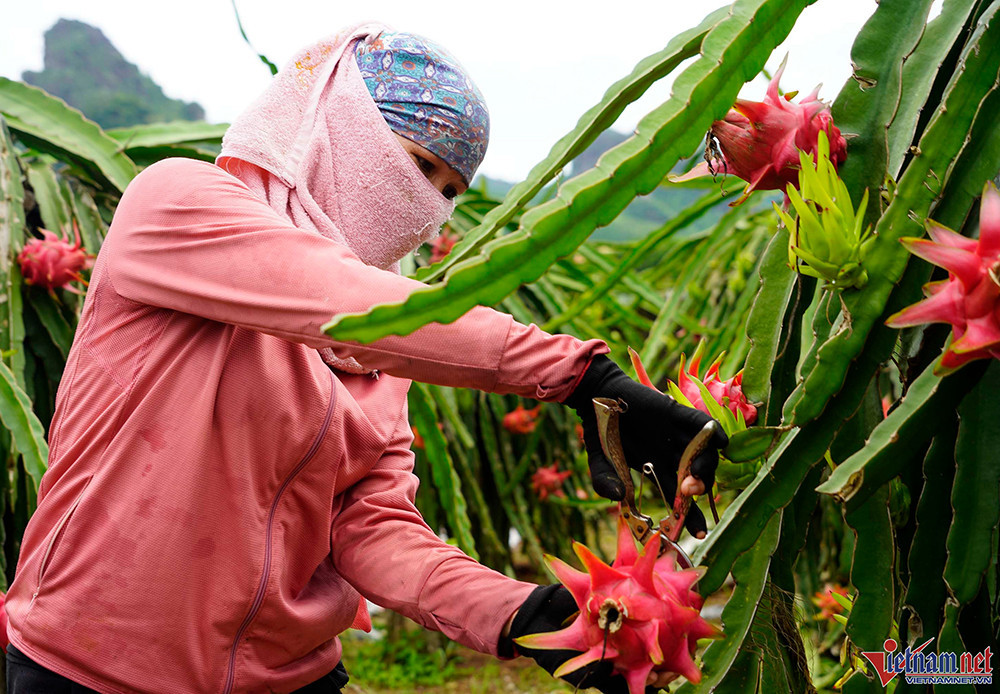
Dragon fruit exports in June plunged 53% from the month before due to declining supply, rising overseas competition and administrative procedure issues.
All 10 biggest markets saw declines in purchase, with China, the biggest buyer, spending $15 million, down 60% from May, according to Vietnam Customs.
Indian, the U.S. and United Arab Emirates bought between 48% and 57% less.
Overall, dragon fruit exports in the first six months fell 1.5% year-on-year.
Huynh Canh, chairman of the Binh Thuan Dragon Fruit Association, attributed the significant export decline to supply constraints.
Unfavorable weather in May and June caused fungal diseases and crop damage, resulting in many shipments failing to meet quality standards, he said.
Dang Phuc Nguyen, General Secretary of the Vietnam Fruit and Vegetable Association, highlighted increased competition in the global market.
As China, India, and some South American countries entered harvest season, Vietnamese dragon fruit struggled to compete in price, he added.
Additionally, changes in the authority issuing food safety certificates for the European Union market have further complicated exports to this region.
A new circular effective July 1 moved the responsibility for issuing food safety certificates for E.U.-bound shipments from the Department of Crop Production and Plant Protection to provincial People’s Committees.
This certificate is mandatory to meet the E.U.’s stringent quarantine requirements.
The circular mandates that within one working day of receiving valid documents, the designated agency must review them.
These changes followed a major merger of provinces in Vietnam, reducing the total number from 63 to 34.
Export companies have reported that the transition has disrupted the certification process for approximately 10 days, forcing many dragon fruit shipments to remain in cold storage awaiting approval.
Source: VN Express